

Why Buy Independent Artist Music: 2026 Fan's Guide
Table of Contents
- How Buying Music Directly Helps Independent Artists
- The Benefits of Supporting Independent Musicians
- Streaming vs. Buying Independent Artist Music: What Actually Reaches the Artist
- Ownership, Master Rights, and Why Independent Artist Music Stays Independent
- Where to Buy Physical Music That Supports the Artist Directly
- The Middle-Class Artist Reality and the Environmental Cost of Streaming
- Frequently Asked Questions
Last Updated: September 23, 2026
How Buying Music Directly Helps Independent Artists
Buying directly from an independent artist puts money in the hands of the person who wrote the song, and it keeps that artist making more of it. Streaming pays fractions of a cent per play; a direct purchase pays once, fully, to the creator. This guide from TXMRB walks through why buying independent artist music matters, where to find physical copies, and what your support actually changes.
The math is simple. A CD sold at a show or through an artist's own store returns the full purchase price to that artist. A single stream returns a tiny sliver, split across rights holders before anyone sees it. That gap is the difference between a hobby and a working career.
Here is what most listeners never hear: independent musicians are not asking for charity. They are asking for a fair trade. You get a record you own forever; they get rent, studio time, and the ability to press the next one.
- Buy one physical album from an artist you stream
- Order from the artist's own store when possible
- Share the record with one person who has never heard of them
- Follow the artist directly to hear about new releases
The Benefits of Supporting Independent Musicians
The benefits of supporting independent musicians reach further than the artist's bank account. When you buy from an independent creator, you fund the next album, the next tour, and the next piece of work that would otherwise never exist.
Independent artists answer to their audience, not a committee. That freedom shows up in the music. Songs can be personal, strange, or specific in ways that a label chasing broad appeal would never allow.
There is also a community side. Small artists remember the people who showed up early. Buy a record now and you are part of the story the artist tells later.
Streaming vs. Buying Independent Artist Music: What Actually Reaches the Artist
Streaming reaches millions of ears but pays the artist almost nothing per listen. A purchase, whether a CD or a digital album, sends the bulk of the money straight to the creator. Both have a place, but only one keeps the lights on.
The reason comes down to how each path is structured. On streaming platforms, a play does not generate a fixed payment to the artist. Revenue is pooled from subscriptions and ads, then divided among rights holders based on share of total plays. That pool is split between the recording side (the master) and the composition side (the publishing), and each side is often further divided among a label, a distributor, a publisher, and a PRO. By the time an independent artist sees their share of a single play, it is a fraction of a cent, and it typically arrives weeks or months later through a distributor statement.
A direct purchase works the opposite way. When a fan buys a CD from the artist's own store or merch table, the artist receives the sale directly, minus whatever the payment processor and any physical production cost take out. There is no pool, no split across multiple rights holders, and no waiting on a platform's reporting cycle. The transaction is between the fan and the maker.
Here is the honest comparison:
| Factor | Streaming | Direct Purchase |
|---|---|---|
| How the artist is paid | Pooled revenue split by share of plays | Full sale price to the artist, minus processing and production |
| Payout per unit | Fraction of a cent | The price the fan paid |
| Speed to artist | Delayed, reported on a platform cycle | Immediate or near-immediate |
| Ownership for fan | None, access only | Permanent copy |
| Supports next release | Barely | Directly |
| Artist control | Platform-dependent | Artist-controlled |
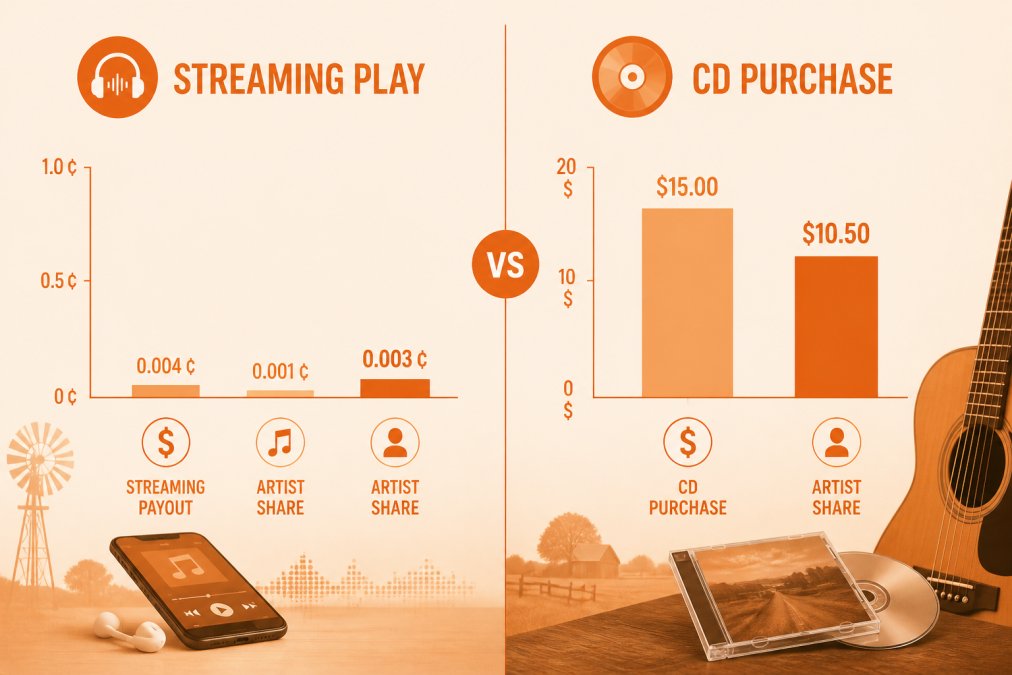
Streaming is a discovery tool. It is how most people first hear an independent artist. But discovery and support are two different jobs, and streaming only does the first one well.
This is also where the fan's side of the equation matters, and most articles skip it. A stream gives you access for as long as the platform keeps the track licensed. A purchased CD or digital album is yours, it does not disappear when a catalog is pulled, a licensing deal lapses, or a service changes its terms. For fans who care about collecting, that difference is the whole point. You are not renting the song; you own a copy of it, and you are part of the small group of people who made the record possible.
Ownership, Master Rights, and Why Independent Artist Music Stays Independent
Independent artist music stays independent because the artist owns the master rights and the publishing. When an artist signs those away, the label controls how the music is used, sold, and licensed. When they keep them, every decision stays with the person who made the song.
Master rights are the rights to the actual recording, the specific take, mix, and master file. Publishing rights cover the composition itself: the words and melody, separate from any particular recording of them. An independent artist who holds both can license a song for a film or TV placement, sell it at a show, press a record, or upload it to a new platform without asking anyone's permission.
- Distribution, independent artists typically use a distributor to get music onto streaming services and stores. The distributor takes a cut or a flat fee, but the artist keeps the master.
- Performance rights organizations (PROs), organizations like ASCAP, BMI, and SESAC collect royalties when a song is played publicly, on radio, or in a venue. An independent artist registers their compositions with a PRO so those royalties come to them.
- Sync licensing, when a song is placed in a film, show, or ad, the master and the publishing are licensed separately. An artist who owns both negotiates both sides.
- Mechanical royalties, owed when a composition is reproduced, including physical copies and digital downloads. For an independent artist selling their own CDs, this is often a distinction without a difference, because the same person is on both sides of the transaction.
At TXMRB, the music, the writing, and the physical releases all come from the same independent creator. That is the practical version of "staying independent", one person making the calls, and one person your purchase supports. You can see how that plays out on the Wide Open album page.

Where to Buy Physical Music That Supports the Artist Directly
The best place to buy physical music is the artist's own store, followed by live shows and independent record shops. Buying direct cuts out the middle layer, so more of your money reaches the creator.
Options worth knowing:
- The artist's own website - the highest share goes to the artist
- Live shows and merch tables - instant sale, no shipping wait
- Independent record stores - supports a local shop and the artist
- Bandcamp-style platforms - artist-friendly digital and physical sales
The Middle-Class Artist Reality and the Environmental Cost of Streaming
Most independent artists sit in a middle tier: not famous, not failing, just working. They earn enough to keep going if enough people buy directly, and they stop if no one does. That is the "middle-class artist" reality, and it is the group your purchase most affects.
Frequently Asked Questions
How does buying music directly help independent artists?
When you buy direct from an independent artist, most of the money stays with the person who wrote, recorded, and pressed the music. Streaming pays a fraction of a cent per listen, so an artist needs thousands of plays to earn what a single CD sale brings in. A direct purchase also tells the artist which songs and stories connect with real listeners, which shapes what they make next. Buying independent artist music is one of the few ways fans can fund a career without a label taking a cut.
Why is physical media important for independent musicians?
Physical media like CDs gives independent artists a product they own outright, with no platform standing between them and the buyer. A CD can be signed, gifted, resold, or kept for decades, and it carries liner notes and artwork that streaming apps strip away. For small operations, physical sales also provide predictable income that helps cover recording and manufacturing costs. That tangible value is a big reason the benefits of supporting independent musicians go beyond a single listen.
What is the difference between streaming and buying music from an artist?
Streaming gives you access to a catalog you never own, and the artist is paid a small fraction of a cent each time you listen. Buying, whether a CD or a digital download, is a one-time payment that transfers something to you and sends a much larger share to the artist. Streaming rewards volume; buying rewards the specific artist you chose. Many fans do both, using streaming to discover and purchases to support the records they actually love.
How can fans support independent artists beyond streaming?
Buy the music directly, whether that means a physical CD or a download from the artist's own store. Share a song with one friend who would genuinely like it, which does more than a passive playlist add. Attend a live show and buy merchandise, since touring and merch often pay better than streams. You can also leave a review, follow the artist's page, and sign up for their email list so you hear about new releases first. Each of these keeps an independent career moving.