

Where to Buy Physical Music in 2026: A Collector's Guide
Table of Contents
- The Benefits of Owning Physical Media in 2026
- Where to Buy Physical Music: 7 Trusted Sources
- How to Start a Vinyl Collection Without Wasting Money
- Where to Buy Independent Artist CDs (and Why It Matters)
- Physical Media Grading Standards Every Collector Should Know
- How to Store and Preserve Your Music Collection
- Conclusion
- Frequently Asked Questions
Last Updated: September 10, 2026
The Benefits of Owning Physical Media in 2026
Physical media is having a moment. According to Recording Industry Association of America (RIAA) revenue data, vinyl records have now posted more than a decade of consecutive growth even as streaming dominates overall listening. That trend matters because it tells you something streaming can't: a growing number of listeners want music they can hold, display, and own outright.
This guide from TXMRB covers where to buy physical music, how to avoid overpaying, and how to keep a collection in good shape for decades. Physical music is any recorded release sold in a tangible format, including vinyl LPs, compact discs, cassette tapes, 45s, and even 8-track cartridges. The appeal is simple: liner notes, album art, and a sense of permanence that a digital file never delivers. Below, we break down the seven sources collectors trust most, plus the grading and storage knowledge most beginners learn the hard way.
Where to Buy Physical Music: 7 Trusted Sources
The best places to buy physical music fall into seven categories, each suited to a different kind of buyer. Local shops reward patience, online marketplaces reward research, and direct-from-artist stores reward anyone who wants their money to reach the musician. What separates a good buying experience from a bad one is understanding how each channel actually works before you spend.
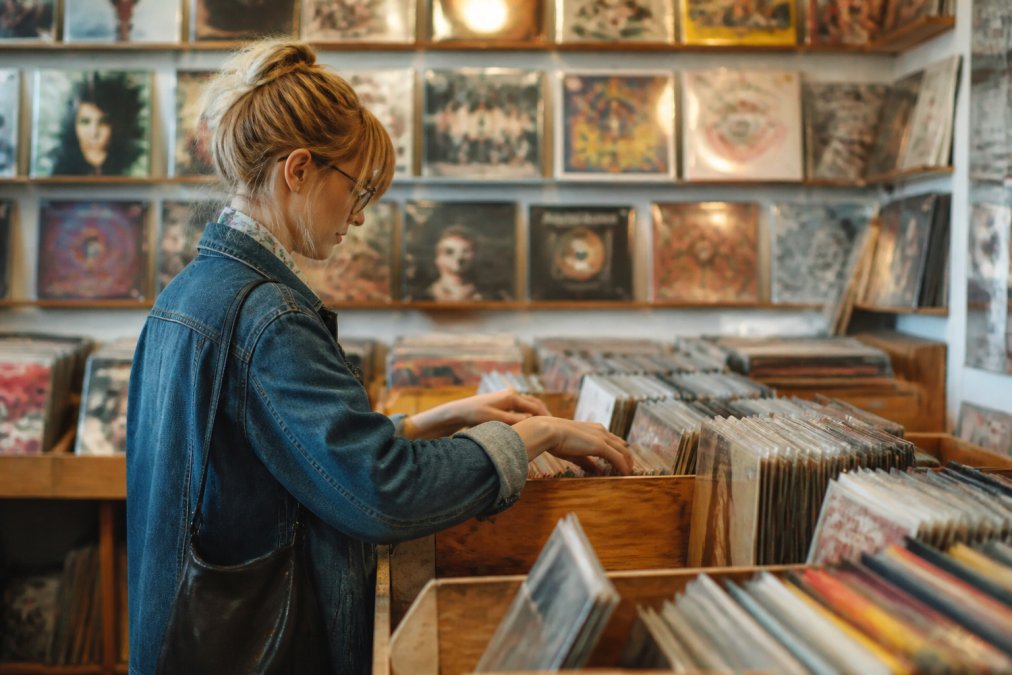
- Local record stores for crate digging, trade-ins, and hands-on inspection
- Online marketplaces for hard-to-find titles and out-of-print pressings
- Direct-from-artist stores for new releases and indie exclusives
- Label web stores for reissues and limited pressings
- Estate sales and garage sales for rare pressings at low prices
- Record fairs and conventions for concentrated selection in one day
- Independent artist shops for handmade, small-batch physical releases
Local Record Stores and Crate Digging
Crate digging is the practice of flipping through bins of used records by hand, and it remains the single best way to learn grading. You can inspect a used LP for scratches, warping, and sleeve wear before you pay, something no online listing lets you do.
Local shops also run on trade-in economics that online sellers can't match. A typical store buys used records at roughly 30-50% of what it expects to resell them for, often as store credit rather than cash (discogs.com). That means your duplicates and unwanted pressings can fund new purchases, and the store absorbs the risk of grading and resale. Ask whether the shop pays more in trade credit than cash; most do, and the difference is usually worth taking if you plan to buy again.
A common mistake is buying the first copy you find. Compare two or three pressings of the same title when you can. Early pressings and original masters often sound different from later reissues, and the difference is audible on a decent turntable. Bring a phone with a matrix-number reference so you can confirm which pressing you're holding before you reach the counter.
Online Marketplaces and Direct-from-Artist Stores
Online marketplaces give you access to catalogs no single store can stock, but condition descriptions vary wildly between sellers. Ask for photos of the actual record, not stock images, before committing. On large marketplaces, seller feedback scores and return policies matter more than the listed grade, a seller who accepts returns is worth a small premium over one who doesn't.
Watch the fee structure on the selling side, too. If you ever resell, marketplace commission plus payment processing typically eats a meaningful slice of the sale price, which is why many collectors prefer trading locally or selling direct. On the buying side, factor shipping into every comparison: a cheap record with high shipping often costs more than a slightly pricier one with free shipping.
Direct-from-artist stores and label shops are where you'll find new releases, indie exclusives, and pre-order bundles. Buying direct usually means better packaging and a bigger share of the money reaching the artist. If you're chasing a specific discography, start with the artist's own store before checking resale sites, limited pressings often sell out there first and then appear on resale at a markup.
Estate Sales, Record Fairs, and Independent Shops
Estate sales and garage sales are the lowest-cost channel and the least predictable. You're buying as-is, often without the ability to play-test, and pricing is set by people who may not know what they have. That cuts both ways: a rare pressing can go for a fraction of its value, or a common one can be priced above retail. Bring cash, arrive early, and know your target titles well enough to spot them in a box of unknowns.
Record fairs and conventions compress months of crate digging into a single day. Dealers bring curated stock, you can negotiate in person, and you can inspect condition directly. The trade-off is competition, serious collectors arrive at opening, and the best pieces move in the first hour.
Independent artist shops sit between a label store and a local shop: small-batch, handmade, and frequently the only physical version of a release that will ever exist. These are the purchases that keep niche catalogs alive, and they're the ones most buying guides skip entirely.
How to Start a Vinyl Collection Without Wasting Money
Starting a vinyl collection without wasting money comes down to three rules: buy what you'll actually play, buy used before new, and never pay a premium for a pressing you haven't verified. But the single biggest decision you'll make early on isn't which record to buy, it's where to buy it. Local and online sourcing produce very different collections, costs, and habits, and most guides never compare them.
- Set a monthly budget and stick to it. Collections grow fast when every purchase feels small.
- Start with 5-10 albums you already love. A focused collection beats a random pile.
- Buy used for catalog titles, new for current releases. Older pressings are often cheaper and better.
- Learn to grade before you spend big. See the grading section below.
- Check the pressing, not just the title. Catalog numbers and matrix codes tell you which version you're holding.
- Upgrade your turntable before your collection. A poor stylus damages records over time.
- Track what you own. A simple spreadsheet prevents duplicate buys.
Local vs. Online Sourcing: Which Strategy Fits You
Local crate digging and online buying aren't just different shopping methods, they build different collections. Understanding the trade-offs before you commit saves both money and regret.
Local sourcing rewards time and repetition. You can inspect condition in person, negotiate, trade in duplicates, and avoid shipping costs entirely. The downside is selection: a small shop may not have the title you want this month, and you may wait months for it to surface. Local buying also tends to be cheaper per record because you're not paying shipping or marketplace fees, but it's less efficient if you have a specific list.
Online sourcing rewards research and patience. You can find almost any pressing eventually, compare multiple copies of the same title, and buy from sellers across the country. The trade-offs are shipping costs, condition risk, and the temptation to overbuy because everything is one click away. Online buying also makes it easy to pay a premium for a grade you can't verify until the record arrives.
A practical hybrid works for most collectors: use local shops and fairs for browsing, discovery, and cheap catalog titles, and use online marketplaces for specific pressings you've been hunting. Reserve direct-from-artist and label stores for new releases and limited runs, where buying early is the only way to get them at face value.
Setting a Budget That Survives the Hobby
A monthly budget only works if it accounts for the hidden costs. Shipping, inner sleeves, storage, and the occasional turntable upgrade all compete with the record budget. A common pattern is to set a record budget and then quietly overspend on accessories, so build those into the same number.
Buying used before new stretches a budget furthest on catalog titles, but not on current releases, new pressings of new albums are often priced competitively at retail, and waiting for resale can mean paying more. Know which category you're shopping in before you decide where to look.
Where to Buy Independent Artist CDs (and Why It Matters)
Independent artist CDs are best bought directly from the musician's own store, at live shows, or through small independent shops that carry local releases. Buying direct means the artist keeps a far larger share than they would through a streaming payout or a third-party reseller.
This is where TXMRB fits naturally. Founded by Texas country artist and author Michael, TXMRB presses and ships its own physical CDs alongside handcrafted goods, all made in Liberty Hill. Every disc is a direct line to the person who wrote and recorded it, not a warehouse SKU.
Why does it matter? Because independent releases are frequently the only physical version that will ever exist. Major-label titles get reissued for decades. A small-run indie CD might be pressed once. Supporting independent artists keeps that catalog alive, and it's one of the gap areas most buying guides skip entirely.
Physical Media Grading Standards Every Collector Should Know
Grading is the shared language collectors use to describe condition, and learning it protects you from overpaying. Most sellers use the Goldmine-style scale, which runs from Mint (M) down to Poor (P) (goldminemag.com).
| Grade | Meaning | What to Expect |
|---|---|---|
| Mint (M) | Perfect, often sealed | No marks, no wear |
| Near Mint (NM) | Nearly perfect | Minimal handling signs |
| Very Good Plus (VG+) | Light wear | Minor surface noise possible |
| Very Good (VG) | Noticeable wear | Audible noise, plays through |
| Good (G) | Heavy wear | Significant noise, still playable |
| Poor (P) | Severely damaged | Collectible value only |
A common mistake is treating "VG+" and "VG" as close. They aren't. On a quiet passage, the difference between the two is often obvious, and the price gap reflects it. When in doubt, ask for a play-graded description rather than a visual one.
How to Store and Preserve Your Music Collection
Proper storage is what separates a collection that lasts decades from one that warps within a few summers. Heat, sunlight, and stacking are the three biggest threats to any format.
- Store LPs vertically, never stacked flat. Leaning records warp under their own weight.
- Keep everything out of direct sunlight and away from radiators or vents.
- Use inner sleeves for vinyl and replace damaged cardboard sleeves on CDs.
- Keep cassettes and 8-tracks away from magnets and heat.
- Maintain steady indoor humidity; swings are harder on sleeves and labels than a constant level.
- Handle discs by the edge and label, never the playing surface.
Conclusion
Building a physical music collection takes patience, a working knowledge of grading, and a willingness to buy from the people who actually make the music. That last part is where most guides stop short, and it's exactly where TXMRB starts. Our physical CDs, handcrafted 3D-printed accessories, and apparel are all made in Liberty Hill, Texas, and shipped within 3-5 business days, so you're supporting one independent artist directly rather than a faceless reseller. Browse the TXMRB store and add something real to your shelf.
Frequently Asked Questions
Are physical CDs still sold in 2026?
Yes, physical CDs are still sold and remain a core format for independent artists. Many musicians, especially independent country and folk artists, release CDs at live shows and through their own websites. You can also find CDs at local record stores, online marketplaces, and directly from artist-owned shops. While streaming dominates listening, CDs offer a tangible connection and often include liner notes and album art that digital files lack.
Is it possible to buy music anymore, or is streaming the only option?
Buying music is absolutely still possible. You can purchase vinyl records, CDs, and even cassette tapes from record stores, online retailers, and directly from artists. Many independent musicians sell physical music through their own websites or at concerts. Streaming is convenient, but buying physical music supports artists more directly and gives you a permanent copy you own. The market for physical music has actually grown in recent years, especially for vinyl.
Where is the best place to purchase music if I want rare or hard-to-find titles?
For rare pressings and hard-to-find titles, start with local record stores that specialize in used vinyl and crate digging. Online marketplaces like Discogs and eBay connect you with sellers worldwide. Independent artist websites often have limited-edition releases you won't find elsewhere. For the best results, combine local sourcing with online searches, and check condition grading carefully before buying used records.
What are the benefits of owning physical music over streaming?
Owning physical music gives you a permanent copy that can't be removed by a streaming service. You get higher audio quality on vinyl and CDs, plus tangible items like album art and liner notes. Physical media also supports artists more directly, especially independent musicians who rely on merchandise and music sales. Collecting vinyl records or CDs can be a hobby that connects you to music history and community.
How do I start a vinyl collection without spending too much?
Start by setting a budget and focusing on genres or artists you truly love. Buy used records from local stores or online marketplaces, and learn to grade condition so you don't overpay for damaged vinyl. Reissues of classic albums are often cheaper than original pressings and sound great. Attend record fairs and estate sales for deals. Over time, your collection will grow naturally as you discover new music.
What should I look for when buying used vinyl records?
Check the grading of both the vinyl and the sleeve. Common grades range from Mint (like new) to Good (playable but with visible wear). For playability, Very Good Plus (VG+) or better is a safe choice. Inspect for scratches, warps, and deep scuffs. Ask sellers about playback quality if buying online. Also confirm the pressing year and label, as some pressings are more collectible than others.
How should I store my physical music collection to keep it in good condition?
Store vinyl records vertically, not stacked, to prevent warping. Keep them away from direct sunlight and heat. Use inner sleeves to protect the record from dust and scratches. For CDs, keep them in their cases and avoid touching the playing surface. Cassette tapes should be stored in a cool, dry place and rewound before storing. Proper storage preserves both the sound quality and the value of your collection.